Dima Al-Sayeh to Okaz: The Women’s League is a Successful Model
August 21, 2026

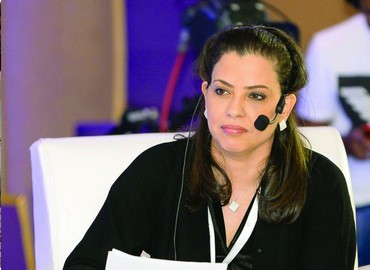
By Amal Al-Saeed (Riyadh)
Dima Al-Sayeh, official spokesperson for the Women’s International Football Association (WIFA), told Okaz that women’s football is undergoing a remarkable leap forward in technical and tactical terms. She noted that the game is currently living through an era of “total football,” having moved on from reliance on individual skill toward a high level of tactical maturity, intense pressing, and rapid ball circulation — with the physical gap compared to men’s competitions steadily narrowing.
Al-Sayeh explained that WIFA is working toward implementing its “2040 Strategy,” aimed at organizing women’s football associations and clubs within an effective institutional framework that expands participation in the sport and increases its appeal and excitement, following the model of men’s football.
She expressed admiration for the rapid development of Saudi women’s football, saying that Saudi football has made an astonishing leap, with Saudi players compressing years of progress into record time. She stressed that developing the current generation requires focusing on three key areas: intensifying international exposure to build competitive experience, strengthening complex tactical awareness, and improving physical endurance levels.
She indicated that moving women’s football from a phase of expansion into a strong, sustainable competitive industry requires continuous investment in grassroots development and the establishment of academies, alongside improved club governance and the advancement of investment and commercial dimensions — all to ensure a fully integrated professional environment.
Al-Sayeh revealed that the federation is preparing to launch and expand youth and junior tournaments to ensure a structured professional pipeline, in addition to gradually building momentum for the sport by organizing friendly matches between women’s teams, with the goal of familiarizing audiences with attending matches and encouraging support for women’s teams.
She added that the plans include doubling prize money, applying the highest standards in broadcasting and officiating, and adopting advanced digital technologies — alongside channeling financial returns toward supporting developmental and humanitarian initiatives in health, education, and emergency relief response during crises and disasters, to be carried out through the WIFA Humanitarian Foundation.
Regarding team accreditation, she confirmed that the federation applies a strict technical classification system to ensure fairness based on merit, along with licensing requirements for clubs to guarantee state-of-the-art stadiums and professional contracts that protect players — noting that this environment provides players with high-level competitive exposure that enhances their mental and physical readiness.
Al-Sayeh also pointed out that WIFA is working to increase the number of seats allocated to internationally participating teams in order to support emerging federations, in positive coordination and cooperation with FIFA, alongside more flexible transfer regulations to facilitate attracting top international players and coaches — noting that the Saudi Women’s League today stands as a successful model in this regard.
The official WIFA spokesperson also revealed to Okaz that the federation is studying, as part of a forward-looking working paper, the possibility of hosting an international women’s football tournament two years after the organization of the Riyadh World Cup 2034, in order to capitalize on the sporting infrastructure and sustain the anticipated momentum of the Saudi World Cup’s success — affirming that turning this plan into reality depends on the welcome and cooperation of the relevant authorities in the Kingdom.
Leave Your Comment